National Gallery of Art
User Experience Design Process Case Study
User Experience Design Process Case Study
Background
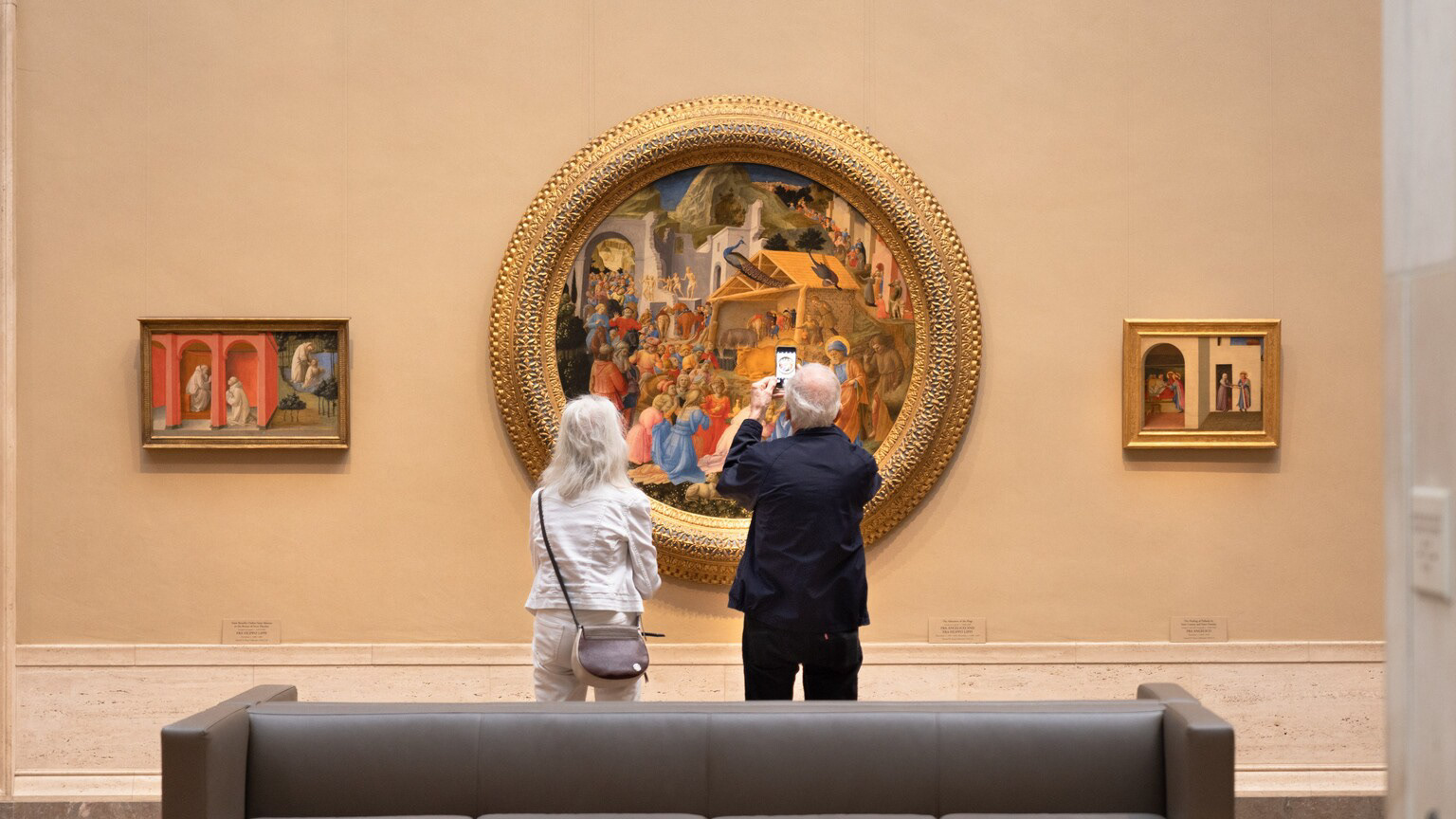
This case study is driven by the strategic mandates outlined in the 2025 Performance and Accountability Report. The primary objective is to align the National Gallery of Art's physical presence with its commitment to Diversity, Inclusion, and Accessibility. By focusing on enhancing the in-person visitors journey, To ensure that the museum experience is universally welcoming and intuitive for all attendees.
Research - Define - Design - Test - Iterate
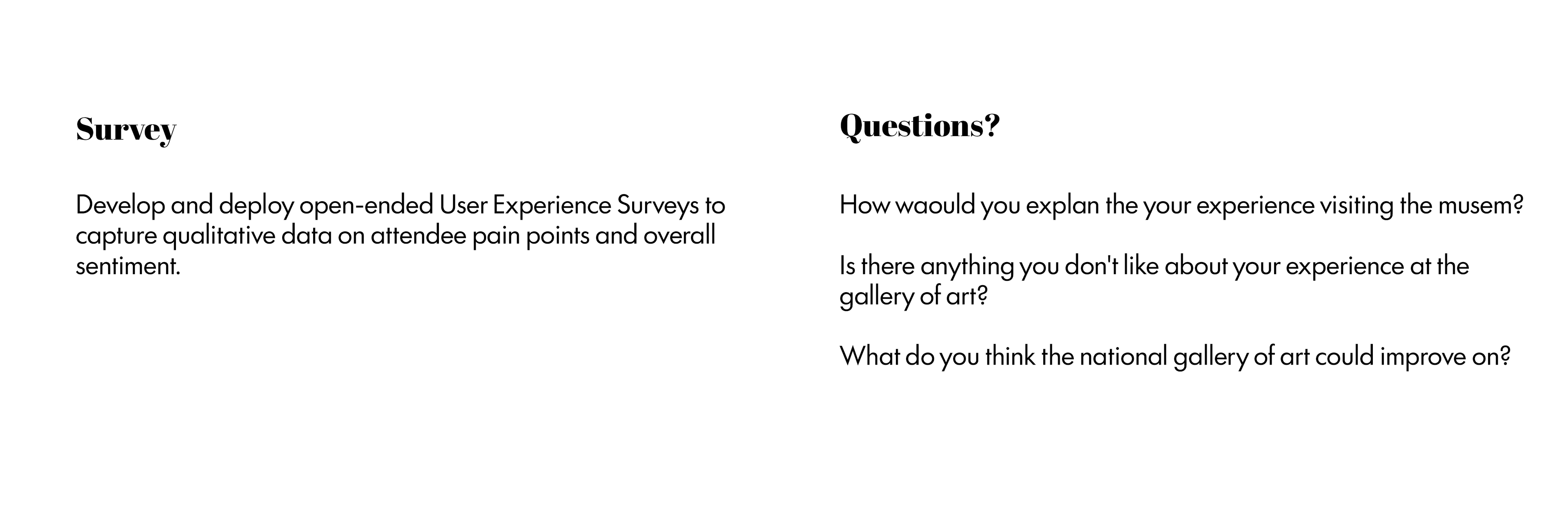
Affinity Mapping Answers
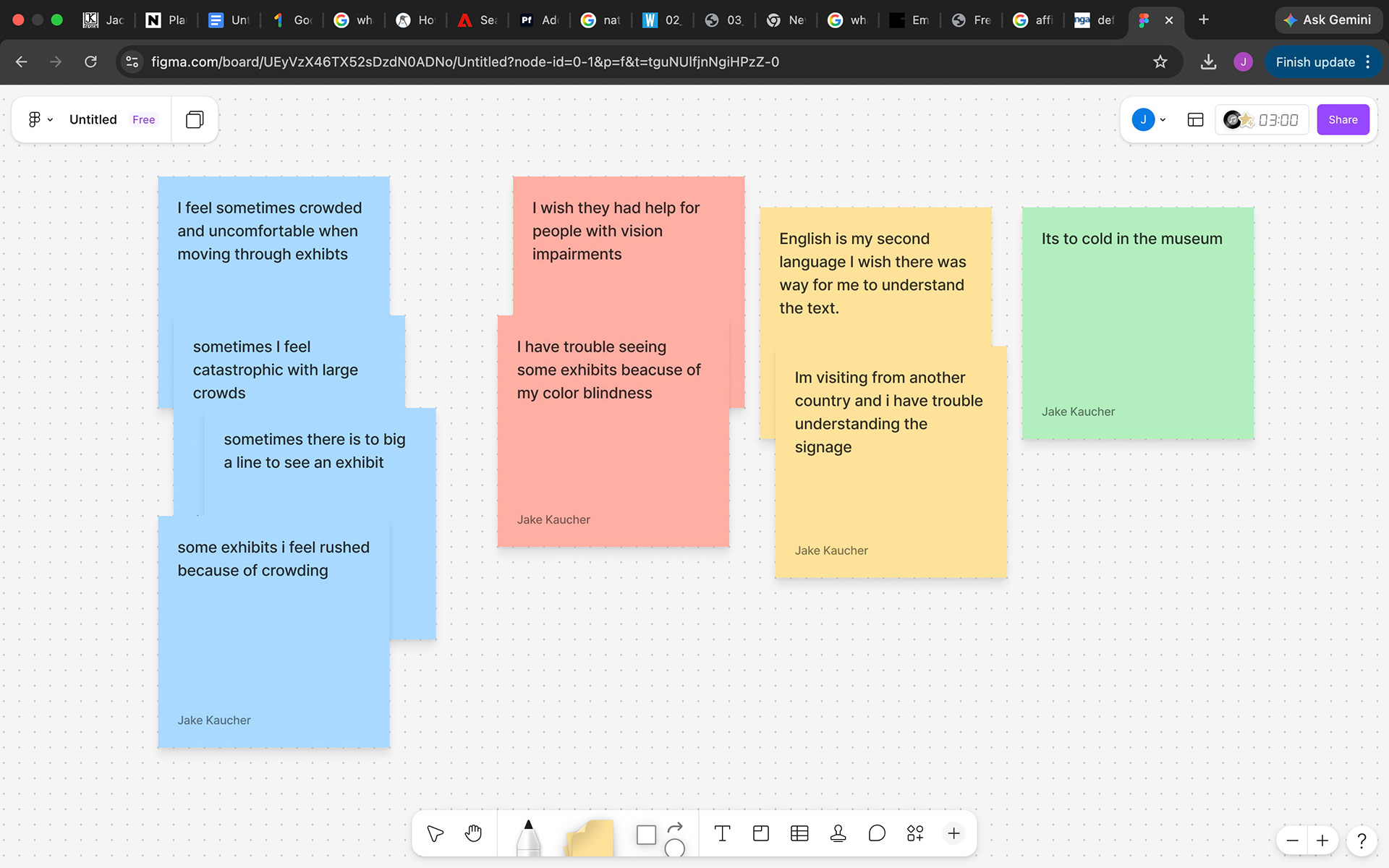
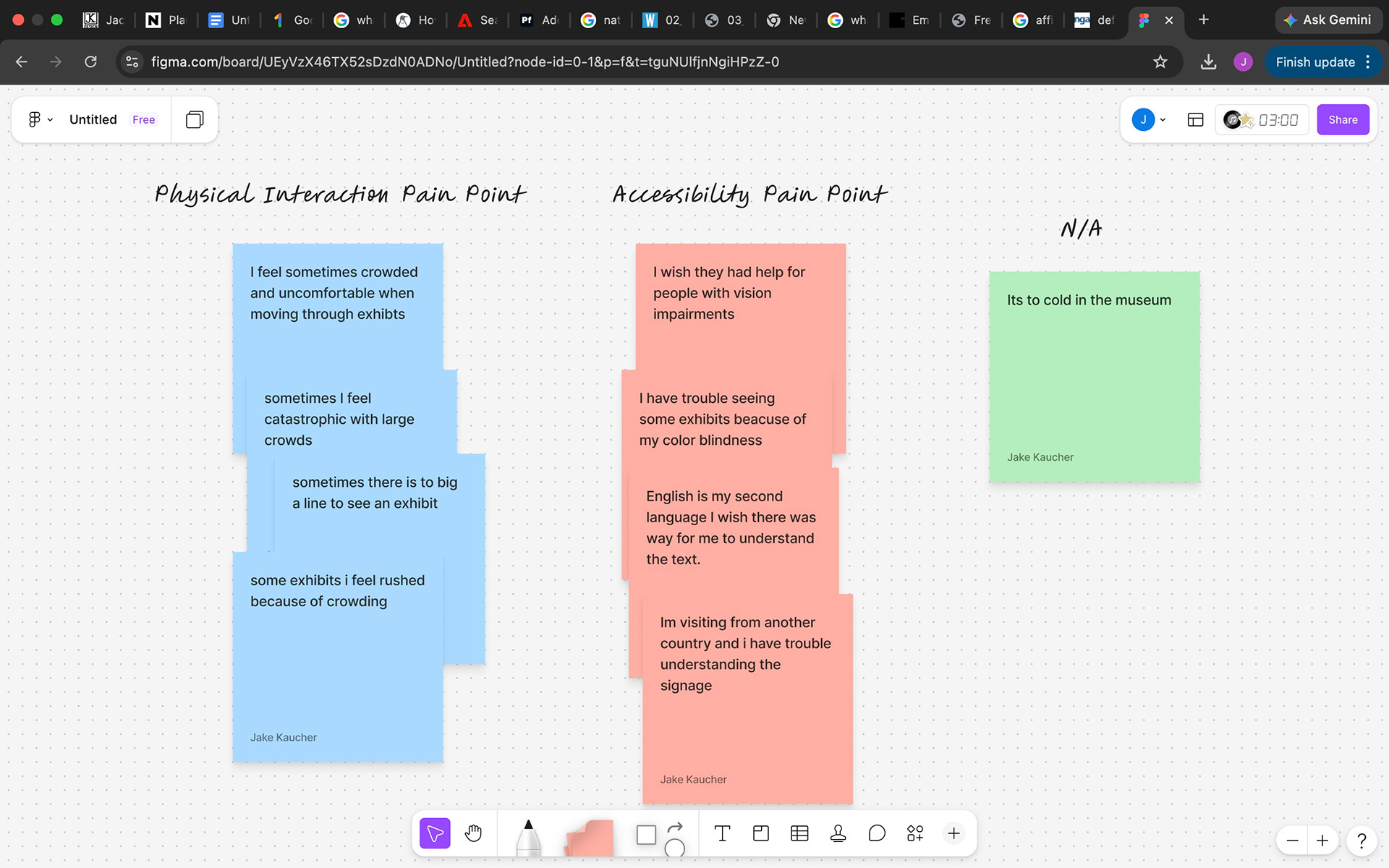
Highlight Common Themes to Perform Comparative Analysis
- Over Crowding Management
- Vision Impaired Accessibility
- Over Crowding Management
- Vision Impaired Accessibility
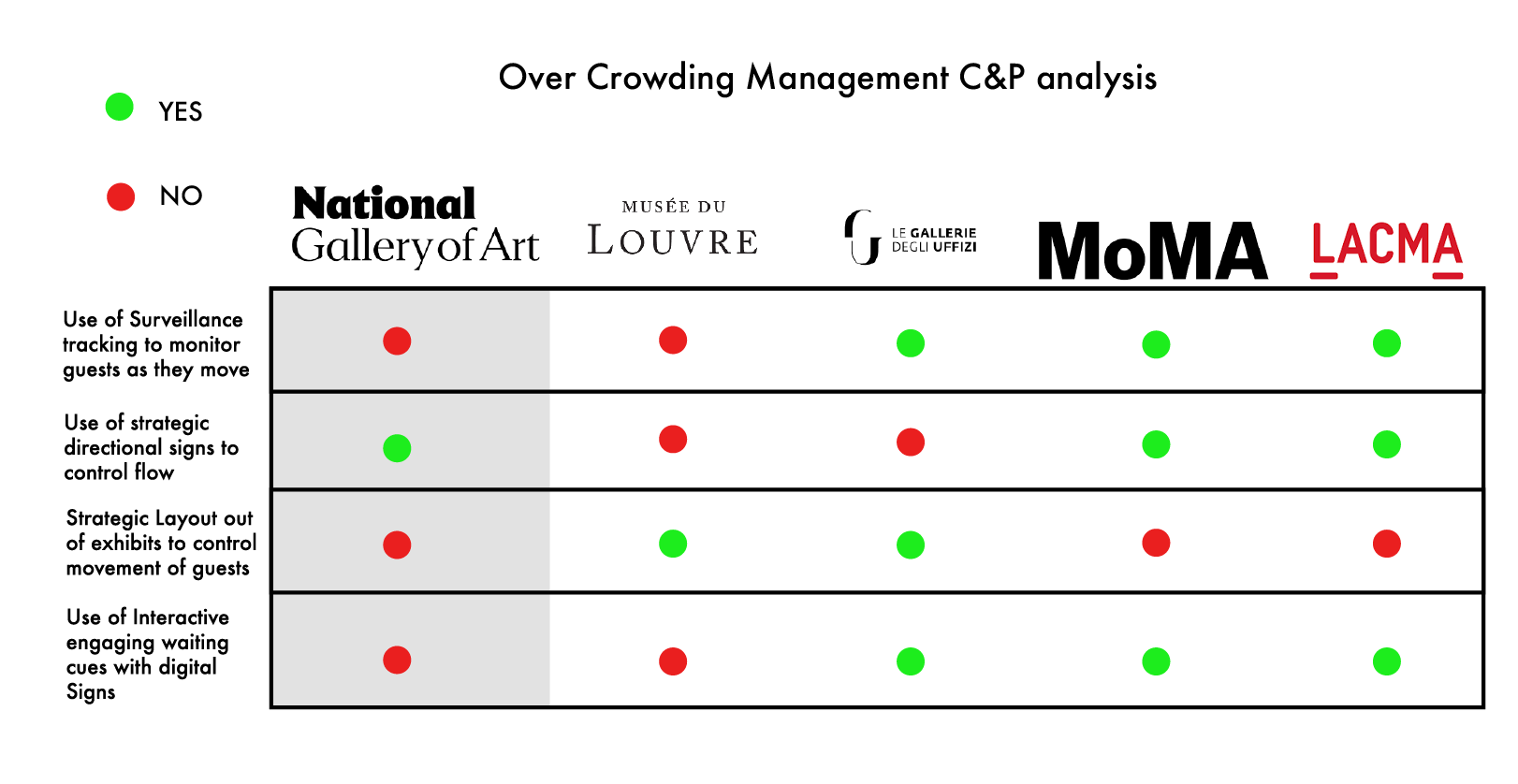
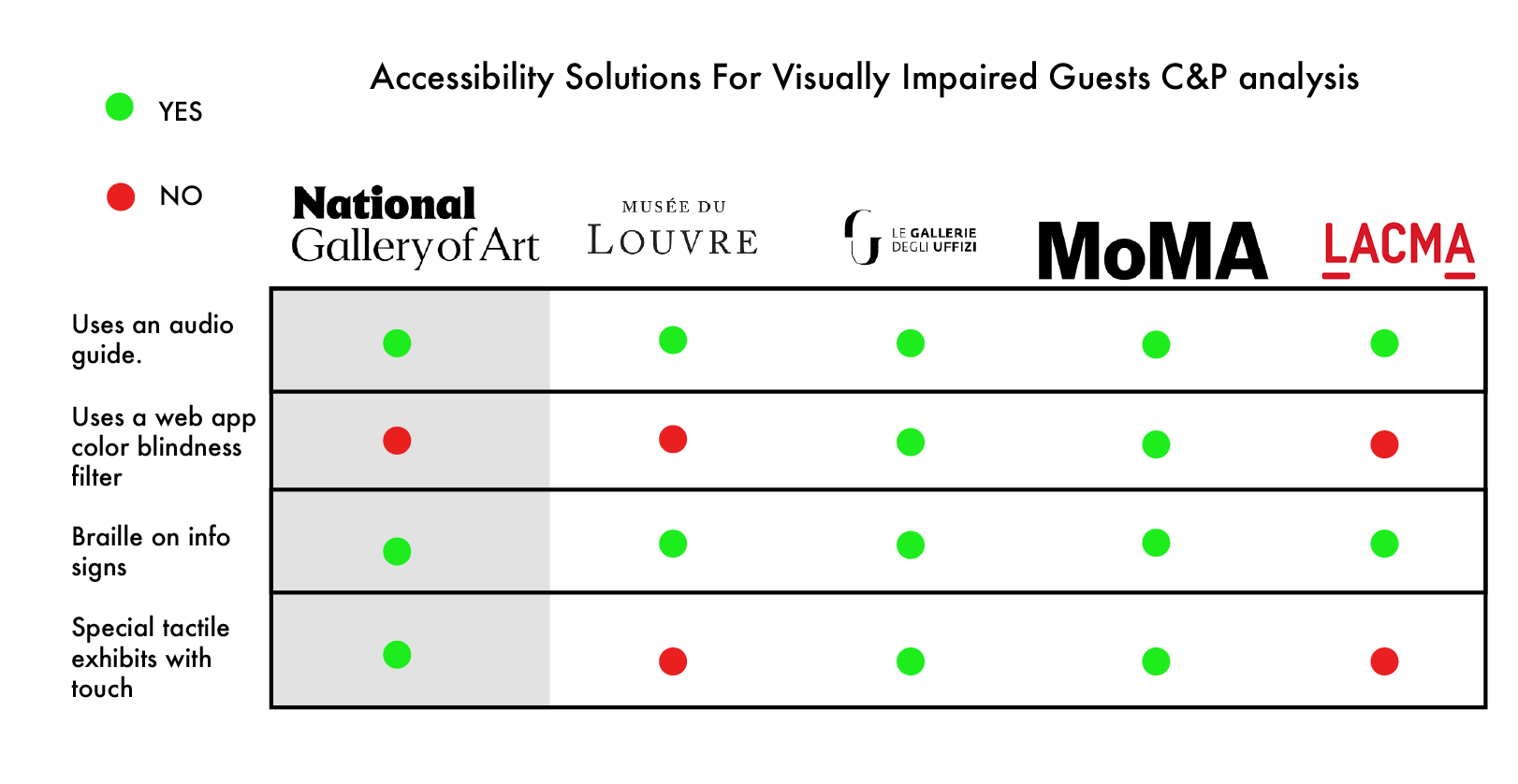
Use the most shared practices as Design Solution Hypothesis.
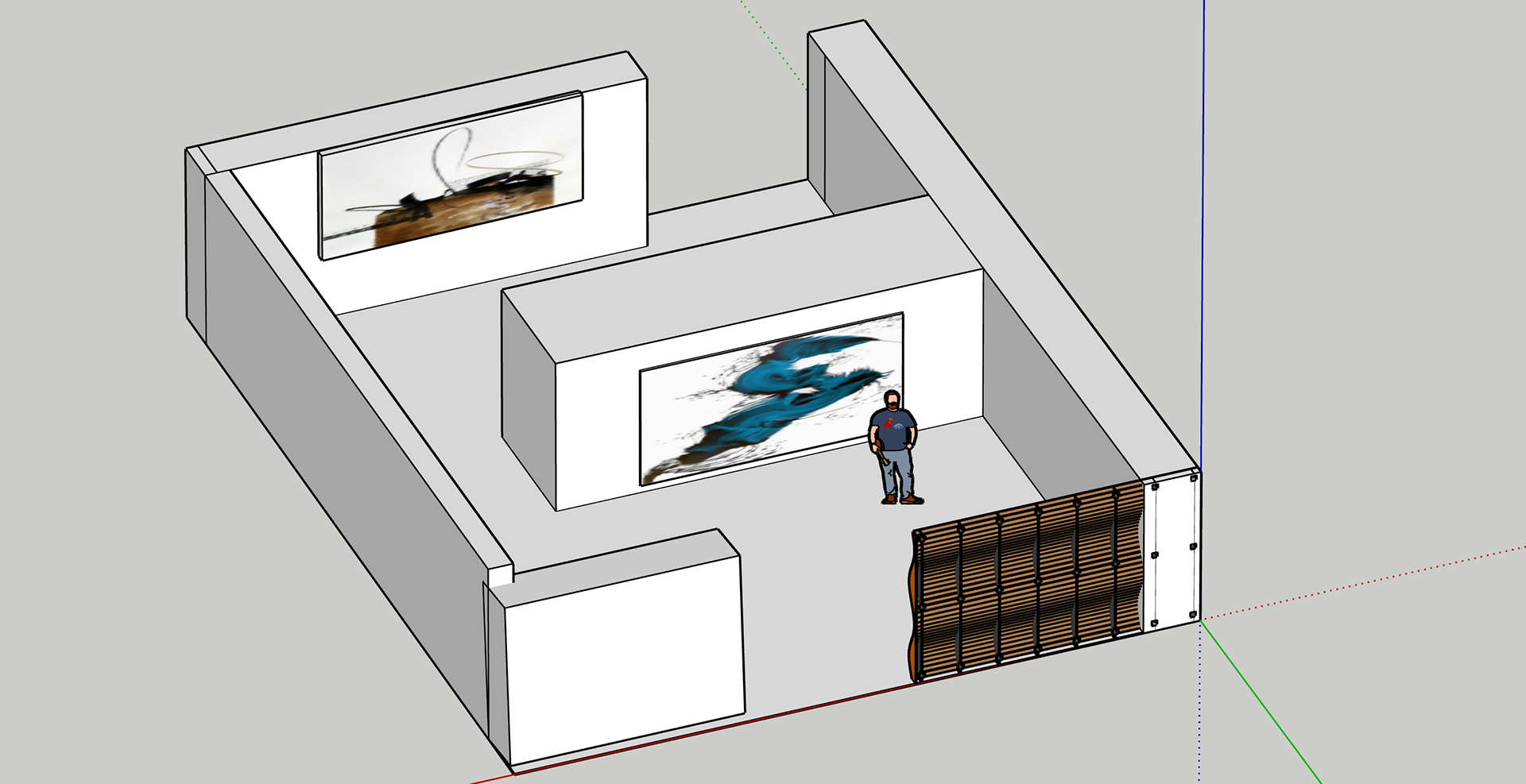
- Crowd Control
Implement a quantitative observational study utilizing the museum's CCTV system and a tagged sample of guests (e.g., every 20th visitor) to track movement patterns. This analysis will measure inter-exhibit travel time and dwell time at points of interest, providing data-driven insights necessary to optimize exhibit layout for controlled visitor flow and mitigation of crowding and bottlenecks.
- Accessibility for vision impaired
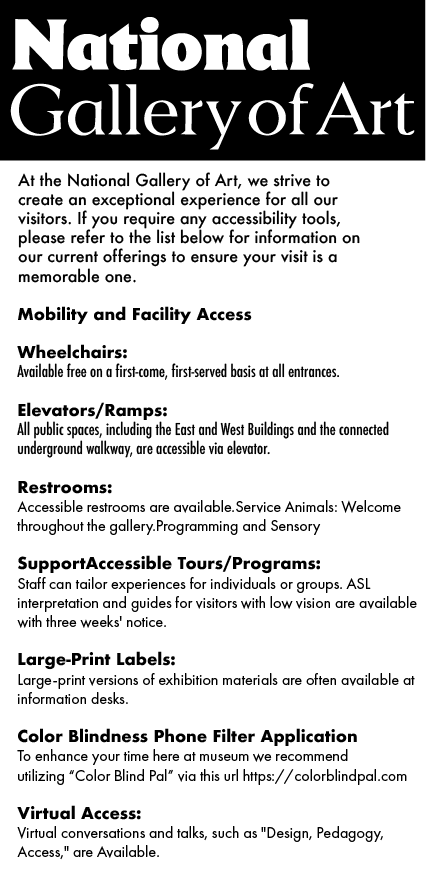
Create leaflet cards that can be included with the museum guides that highlight all the accessibility options for the attendees. This will help guests have a better experience and further shape our reputation that we are committed to making the National Gallery of Art inclusive for all individuals.
Re-Test and Repeat until all desired pain points have been solved.